
Straightforward guidance, not a remote diagnosis. Vehicle symptoms can have multiple causes. If driving feels unsafe, stop in a secure place and arrange hands-on help.
Your car's lights turn on, the dashboard looks normal, but the engine refuses to start. Or perhaps the vehicle worked perfectly yesterday and suddenly will not respond when you turn the key or press the start button.
A car that won't start can have several causes, and a working dashboard does not automatically mean the battery is healthy. The problem could involve the battery connections, starter motor, ignition system, fuel delivery, or another component.
Before buying replacement parts or arranging a tow, a few simple observations can help narrow down the possibilities. Here is what to check first, what different starting symptoms may indicate, and when it is time to get professional help.
What should you check first when your car won't start?
Start by identifying what happens when you attempt to start the engine. Avoid repeatedly turning the key or pressing the start button, as this can further drain the battery.
Follow these initial checks in order.
Check the gear selector and starting procedure
- If your car has an automatic transmission, confirm that it is in park. If the vehicle's manual permits it, try neutral while keeping your foot on the brake.
- For a manual transmission, press the clutch fully if required by the vehicle.
- If the vehicle uses a push-button start, follow the owner's manual instructions for the brake pedal, key fob, and starting procedure.
- Check whether a security indicator or key-recognition warning appears on the dashboard.
A vehicle may refuse to start if it does not recognize the key or detect the required gear or pedal position.
Observe the dashboard lights
Turn the ignition on without repeatedly attempting to crank the engine.
Notice whether the dashboard lights are bright, unusually dim, flickering, or completely absent. Working lights show that some electrical power is available, but they do not prove that the battery can supply enough current to operate the starter.
Listen carefully when you try to start it
The sound—or lack of sound—can help distinguish between different types of faults.
- Rapid clicking: A weak battery or poor electrical connection is a possibility.
- One solid click: The starter motor, starter solenoid, battery connections, or related circuit may need testing.
- Slow cranking: The battery, connections, starter, or engine's mechanical condition may be involved.
- Normal cranking without starting: Fuel delivery, ignition, engine sensors, or other engine-management problems may be responsible.
- Complete silence: Check the starting conditions and consider battery connections, the starter circuit, the ignition switch, or a security-system issue.
These symptoms are clues, not definitive diagnoses. Similar faults can produce similar sounds.
Why won't my car start but has power?
If your car won't start but everything turns on, the next step is to distinguish between an engine that does not crank and one that cranks but never runs.
The battery may be weak even if the lights work
Your headlights, radio, dashboard, and interior lights may operate even when the battery cannot deliver enough current to turn the starter effectively.
Possible warning signs include dimming lights during a starting attempt, rapid clicking, slow cranking, or repeated starting difficulties.
What to check: Look for obvious battery-terminal corrosion or visibly loose connections without touching damaged wiring. If the battery case is swollen, leaking, or smells strongly of sulfur, do not attempt a jump-start. Seek professional assistance.
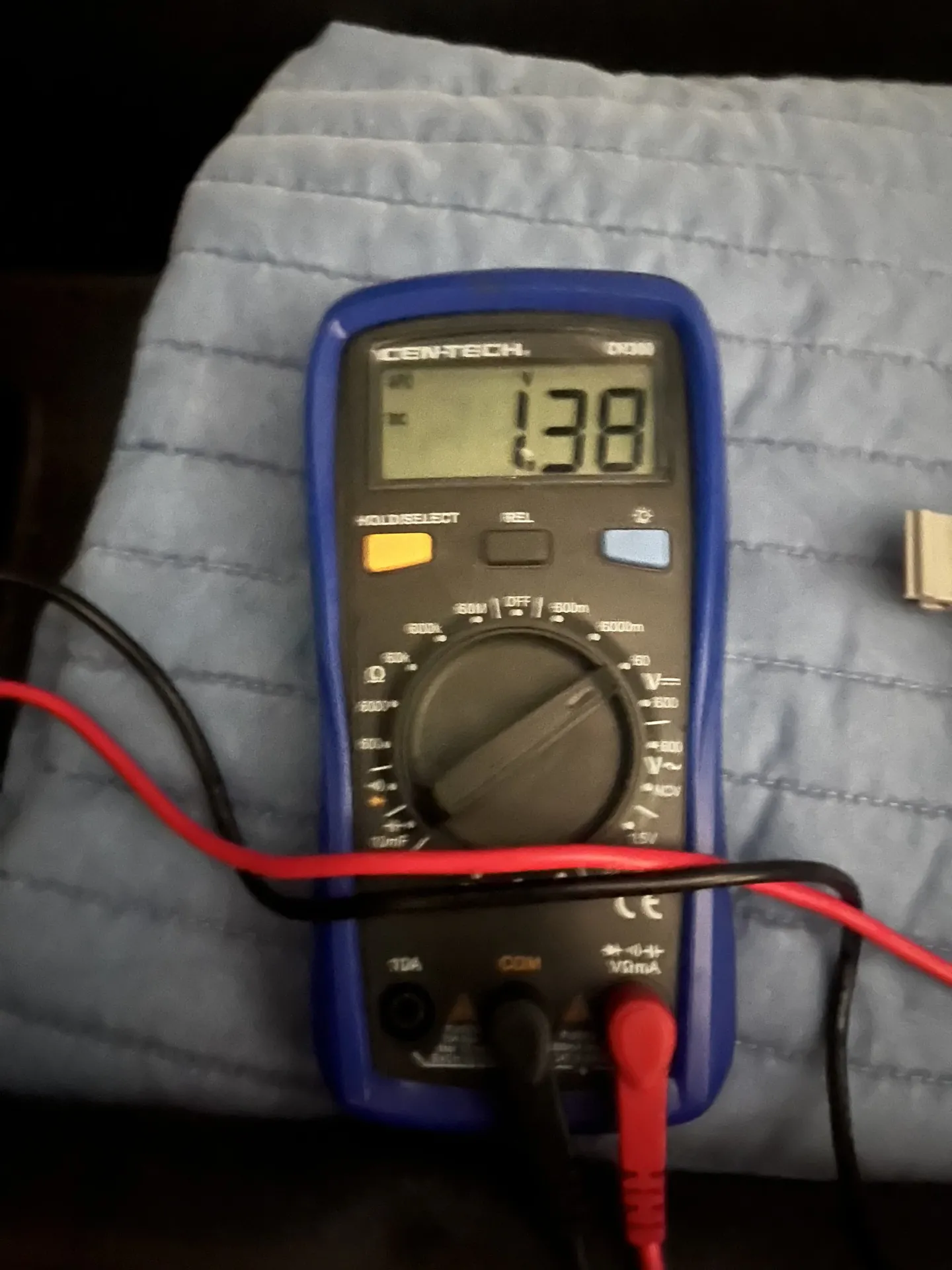
A battery test under appropriate conditions is more useful than judging battery health by the dashboard alone.
The starter motor or its circuit may be faulty
The starter turns the engine so that combustion can begin. If the battery has sufficient power but the starter does not operate correctly, the engine may remain silent or produce a single click.
The problem may involve the starter motor, solenoid, wiring, ground connection, relay, or another part of the starting circuit.
What to check: Note whether the dashboard lights change when you attempt to start the engine and whether you hear a click. Do not assume that a single click proves the starter itself has failed.
The engine may crank but fail to start
If the engine turns over at a normal speed but never runs, the problem may be elsewhere. Potential causes include the following:
- Insufficient fuel or a fuel-delivery fault.
- An ignition-system problem on a gasoline engine.
- A sensor or engine-management fault.
- An immobilizer or key-recognition problem.
- A mechanical timing or compression issue.
What to check: Confirm that the fuel gauge is not showing an empty tank, note any warning lights, and observe whether the engine sounds as though it is cranking normally.
A fuel pump, sensor, or other component should not be replaced based only on a symptom or diagnostic code. Testing is needed to identify the actual cause.
For more specific troubleshooting, see Car Won't Start but Lights Come On.
Seven common reasons a car suddenly won't start
A vehicle can start normally one day and fail the next. The following are common possibilities, but the right diagnosis depends on the symptoms and test results.
1. Weak or discharged battery
A battery can lose its charge because of age, temperature, electrical loads, or a charging-system problem. A weak battery may power accessories but struggle to crank the engine.
2. Loose or corroded battery connections
The battery may be capable of holding a charge, but a poor connection can interrupt the current needed for starting.
3. Faulty starter motor or starter circuit
A failing starter, solenoid, relay, or damaged connection can prevent the engine from turning over.
4. Alternator or charging-system problems
The alternator normally helps maintain the battery's charge while the engine runs. If the charging system is not working properly, the battery may become discharged again after a jump-start or battery replacement.
5. Fuel-delivery problems
A failed fuel pump, relay, restricted fuel filter where applicable, or another fuel-system fault may prevent the engine from receiving the fuel it needs.
6. Ignition, sensor, or security-system faults
On applicable vehicles, failed ignition components, crankshaft-position sensors, key recognition, or immobilizer issues can prevent the engine from starting.
7. Mechanical engine problems
Timing-related failures, loss of compression, or other internal mechanical problems can prevent an engine from starting even when the electrical systems appear normal.
These categories align with the common no-start causes described by AAA. The same symptom can have several underlying causes, so diagnosis should come before parts replacement.
How to tell which starting problem you may have
Use this table to organize your observations before deciding what to do next.
| What happens? | Possible causes | Best next step |
|---|---|---|
| Lights are dim and the engine clicks rapidly | Weak battery or poor connection | Have the battery and connections checked. |
| Lights work, but there is one click | Starter circuit, starter, battery, or connection issue | Arrange starting-system testing. |
| Nothing happens at all | Battery connection, starting interlock, ignition, relay, or security issue | Check the starting procedure and warning indicators. |
| Engine cranks normally but will not run | Fuel, ignition, sensor, security, or mechanical fault | Obtain engine and fuel/ignition diagnosis as applicable. |
| Car starts with a jump but fails again later | Battery or charging-system problem, among other possibilities | Test both the battery and charging system. |
| Engine starts and then stalls | Fuel delivery, electrical, sensor, or engine-management issue | Record when it stalls and seek diagnosis. |
The table narrows down possibilities; it does not confirm a failed part. For example, a jump-start may help identify a low-voltage problem, but it does not establish whether the battery itself or the charging system caused it.
Safe checks you can try before calling a mechanic
If your car won't start, you can gather useful information without dismantling anything.
Confirm the basic starting conditions
Make sure the vehicle is in the correct gear, the required pedal is pressed, and the key or key fob is recognized. If you have a spare key, consult the owner's manual before using it to troubleshoot a possible key-recognition problem.
Check the fuel level
A fuel gauge may be inaccurate, particularly when the tank is very low. If you suspect the tank is empty, refuel safely rather than repeatedly cranking the engine.
Inspect visible battery connections
With the vehicle switched off, look for obvious looseness, corrosion, or damage. Do not disconnect battery cables or attempt electrical repairs unless you know the correct procedure for your vehicle.
Look for warning lights and messages
A security warning, battery warning, or other dashboard message may help guide diagnosis. A warning light is a useful clue, not proof that the component named by the system has failed.
Consider a jump-start only when appropriate
If the symptoms suggest a discharged battery, a jump-start may help—but only when the battery appears safe and the correct procedure for your vehicle is known. Follow the owner's manual and the booster equipment instructions.
Battery systems can present risks of burns, fire, explosion, and electrical damage if handled incorrectly. Hybrid and electric vehicles may have additional requirements; never attempt to service a high-voltage traction battery yourself.
Stop troubleshooting if you notice smoke, a burning smell, leaking fluids, a damaged or swollen battery, unusual mechanical noises, or unsafe roadside conditions. Move away from traffic and arrange appropriate assistance.
What if the battery is fine but the car still won't start?
A battery that has tested healthy does not automatically rule out an electrical problem. The next diagnostic step depends on whether the engine cranks.
If it does not crank, a technician may need to test the starter circuit, battery voltage under load, connections, relays, and required starting signals.
If it cranks but will not run, diagnosis may involve checking fuel delivery, ignition where applicable, sensor signals, engine-management data, and mechanical condition.
Why replacing parts based on guesses can be a mistake
A clicking sound does not always mean the starter has failed. A battery that has been replaced recently can still be discharged. A diagnostic trouble code can identify a detected condition without proving which component caused it.
The more reliable approach is to reproduce the symptom, test the relevant system, and confirm the fault before replacing parts.
If your battery has already been checked, read Car Not Starting but Battery Is Fine for a more focused look at other possible causes.
If the vehicle remains completely silent when you try to start it, Car Won't Start: No Noise at All is the more relevant next resource.
When should you get professional help?
Basic observations are useful, but professional diagnosis is appropriate when:
- The car repeatedly fails to start despite a battery charge or jump-start.
- The starter clicks, struggles, or does not respond consistently.
- The engine cranks normally but will not run.
- A replacement battery has not resolved the problem.
- Warning lights, security messages, or electrical faults appear.
- You suspect a fuel-system, starter-circuit, sensor, or mechanical issue.
- You cannot safely inspect or work around the vehicle.
For cold-weather starting difficulties, additional factors may affect battery performance and engine starting. See Car Won't Start in Cold Weather if the temperature appears to be part of the problem.
Get the problem diagnosed where your car is parked
If your car will not start at home, at work, or in a safe parking location, you may not need to arrange a tow just to begin the diagnosis.
Wayne's Mobile Mechanic provides mobile diagnostics and eligible automotive repairs across Westerville and Greater Columbus, including no-start diagnosis, battery and charging-system diagnosis, and starter and alternator diagnosis. Service depends on the vehicle, location, working conditions, and diagnostic findings.
Instead of guessing which part to replace, describe the symptoms and let the diagnostic process determine the next step.
Don't tow it. Don't wait. Call Wayne, and the garage comes to you.
Call (614) 392-8599 to discuss your car's starting problem or visit the mobile mechanic services page.
Frequently asked questions
Why won't my car start, but the lights come on?+
The battery may still be too weak to operate the starter, or the problem may involve a starter motor, electrical connection, ignition system, or another starting component. Working lights alone cannot confirm battery health.
What is the first thing to check when a car won't start?+
Check that the vehicle is in the correct gear, the required pedal is pressed, and the key is recognized. Then observe the dashboard and listen for clicking, silence, or normal engine cranking. These clues help determine the next diagnostic step.
Can a bad alternator cause a car not to start?+
Yes, indirectly. A failing alternator may not recharge the battery adequately, leaving it too weak to start the engine later. Battery and charging-system tests help distinguish between the two.
Should I keep trying to start my car if it won't start?+
No. Repeated attempts can further drain the battery and may aggravate some faults. Stop if you notice smoke, a burning smell, fluid leaks, or unusual mechanical noises, and seek appropriate assistance.
Can a mobile mechanic diagnose a car that won't start?+
Many no-start problems can be investigated at a safe parking location. A mobile mechanic may be able to test the battery, charging system, starter circuit, and other accessible systems. Some repairs require specialized shop equipment, so service suitability depends on the diagnosis and vehicle.
Should I replace the battery if my car won't start?+
Not without checking it first, when testing is available. The cause could be a discharged battery, poor connection, charging-system problem, starter fault, or another issue. Confirming the cause helps avoid unnecessary parts replacement.