
Straightforward guidance, not a remote diagnosis. Vehicle symptoms can have multiple causes. If driving feels unsafe, stop in a secure place and arrange hands-on help.
You turn the key or press the start button, hear a clicking sound, and the engine refuses to start. If your car won't start and just clicks, the problem may involve a weak battery, poor electrical connections, or the starter system. But the type of clicking matters.
Rapid clicking often points toward a battery or electrical connection problem, while one solid click can indicate a starter-related fault. If there is no clicking at all, the possible causes are different.
Before replacing your battery or starter, pay attention to what happens when you try to start the vehicle. These clues can help you narrow down the problem and decide what to check next.
Why does my car just click when I try to start it?
The first step is to identify the type of sound your car makes. Clicking is a symptom, not a diagnosis, and different faults can produce similar noises.
Rapid clicking when starting the car
If you hear several quick clicks in succession, the battery may not be supplying enough current to operate the starter. A weak or discharged battery, loose terminals, or a poor electrical connection may be responsible.
You may also notice:
- Dashboard lights dimming when you attempt to start the engine.
- Headlights that appear weaker than usual.
- The engine failing to turn over.
- Starting difficulties after the vehicle has been parked for a long time.
What to check: Observe the dashboard lights and look for obvious battery-terminal corrosion or loose connections without touching damaged wiring. A proper battery and connection test can help identify the cause.
Rapid clicking does not automatically mean the battery needs replacing. The underlying cause should be confirmed first.
One solid click when starting the car
A single click followed by silence can suggest that the starter motor or its circuit is not operating correctly. However, a weak battery, poor cable connection, or faulty ground connection can produce similar symptoms.
Possible causes include:
- A faulty starter motor or solenoid.
- A poor battery cable connection.
- A weak battery that cannot deliver sufficient current.
- A fault in the starter relay or associated wiring.
What to check: Note whether the dashboard lights remain bright, dim significantly, or disappear when you attempt to start the car. This observation can help a technician decide which tests to perform next.
Do not replace the starter based on one click alone. Testing is needed to distinguish between a starter fault and an electrical supply problem.
Five common causes of a clicking car that won't start
1. Weak or discharged battery
A battery can still power the dashboard and interior lights while lacking enough current to turn the starter.
This may happen because of battery age, extreme temperatures, leaving electrical accessories on, or an underlying charging problem.
Next step: Have the battery tested under appropriate conditions before deciding whether it needs recharging or replacement.
2. Loose or corroded battery terminals
The battery may be in reasonable condition, but a poor connection can restrict the current required for starting.
Visible corrosion, damaged terminals, or loose connections may provide a clue. However, some connection problems are not obvious from a visual inspection.
Next step: Have the battery connections inspected and tested. Avoid handling damaged cables or attempting repairs if you are unsure of the correct procedure.
3. Faulty starter motor or solenoid
The starter motor turns the engine so that it can begin running. If the starter or its solenoid fails, you may hear a single click without the engine cranking.
Next step: If the battery and its connections test correctly, the starter circuit should be investigated before replacing parts.
4. Charging-system problem
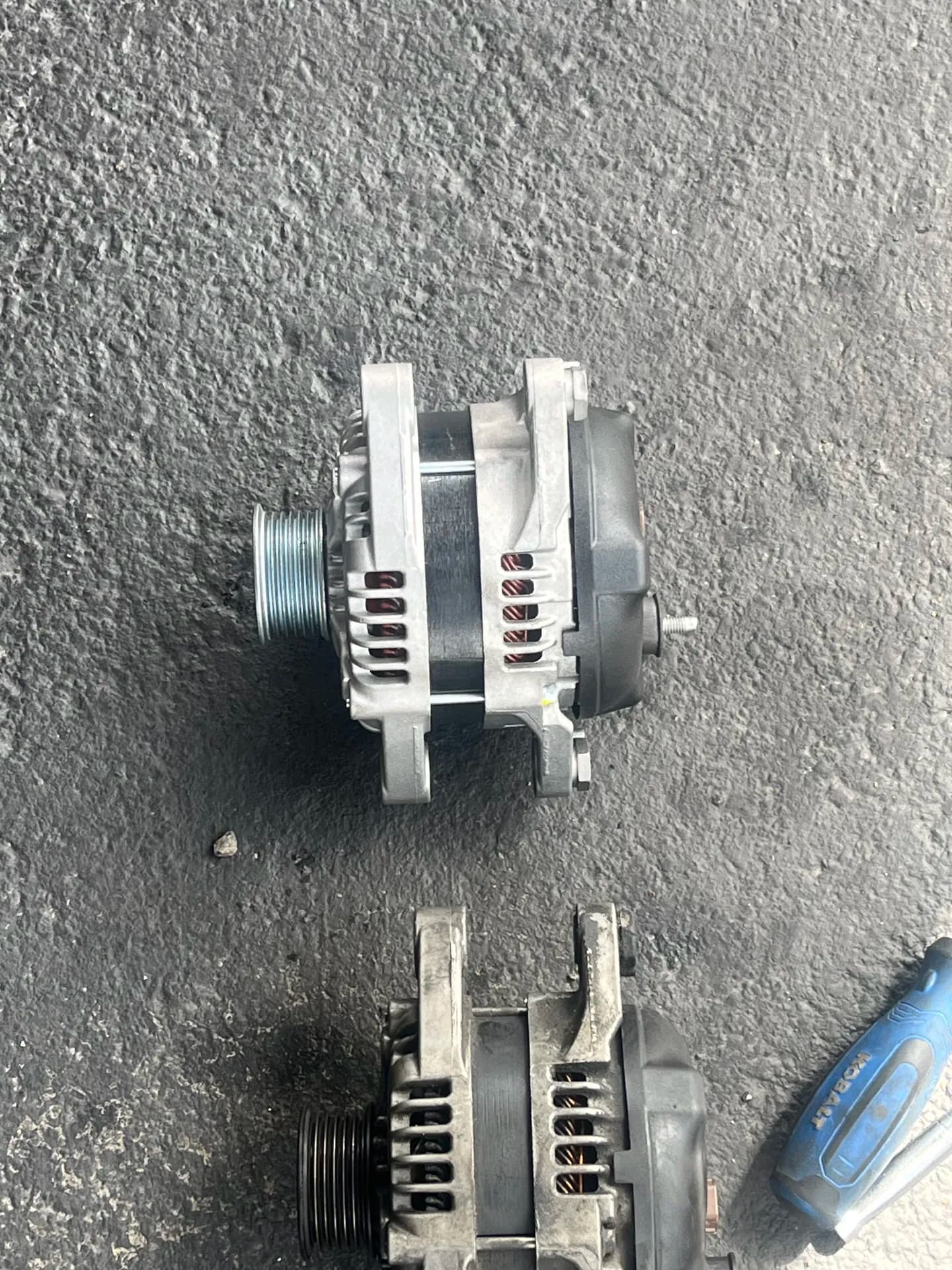
The alternator recharges the battery while the engine runs. If the charging system is not working properly, the battery may become discharged and leave you with a clicking car the next time you try to start it.
You may have noticed a battery warning light, recurring starting problems, or a vehicle that starts after a jump but struggles again later.
Next step: Test the battery and charging system together. A new battery will not solve an underlying charging fault.
For a closer comparison, read Battery or Alternator? How to Tell.
5. Starter circuit or electrical fault
The starting system depends on more than the battery and starter motor. Relays, wiring, ground connections, ignition controls, and vehicle-specific starting interlocks may also prevent the engine from turning over.
Next step: If the battery and starter do not appear to be the problem, professional electrical diagnosis may be necessary to find the interruption in the starting circuit.
What if your car won't start and makes no clicking sound?
A car that produces no clicking sound at all has a different symptom from one that clicks repeatedly.
Possible causes include:
- A completely discharged battery or poor battery connection.
- A faulty starter circuit, relay, or ignition switch.
- A key-recognition or immobilizer problem.
- A transmission-position or starting-interlock issue.
- An electrical fault affecting the starting system.
Start by confirming that the vehicle is in Park, if automatic, and that the required pedal is pressed. For a push-button vehicle, check the owner's manual for the correct starting procedure and any key-recognition warnings.
If the dashboard is completely dark, an electrical supply problem becomes an important possibility. If the dashboard lights normally but nothing happens, the starting controls or starter circuit may need investigation.
Don't confuse silence with a confirmed starter failure. Several different faults can prevent the starter from engaging.
For a more focused explanation, visit Car Won't Start: No Noise at All.
How to check your car safely before calling a mechanic
You can gather useful information without dismantling the starting system.
Check the dashboard and headlights
Turn the ignition on and observe whether the lights appear normal, dim, or completely absent. If they dim sharply when you attempt to start the engine, a battery or electrical connection problem is possible.
Check the gear selector and key
Confirm that the vehicle is in the correct gear and that any required brake or clutch pedal is pressed. If a security warning appears, consult the owner's manual for the appropriate procedure.
Look for obvious battery damage
With the vehicle switched off, look for visible corrosion, loose connections, or damage. Do not touch a leaking, swollen, or otherwise damaged battery, and do not attempt to jump-start it.
Avoid repeated starting attempts
Repeated attempts may further discharge a weak battery. Stop if you notice smoke, a burning smell, unusual mechanical noises, or other signs of a potentially unsafe fault.
Be cautious with jump-starting
If a discharged battery is suspected, use only the procedure specified in your vehicle's manual and the booster equipment instructions. A jump-start is not appropriate for a visibly damaged battery or every type of vehicle.
If the vehicle does not start after a correctly performed jump-start, or the problem returns, further testing is more useful than repeatedly trying again.
What if the battery is fine but your car still clicks?
A battery that has tested healthy does not automatically mean the starter is faulty. The next step is to investigate the rest of the starting system.
Depending on the symptoms, a mechanic may need to check:
- Battery voltage under starting load.
- Battery cable and ground connections.
- Voltage reaching the starter during a starting attempt.
- Starter motor and solenoid operation.
- Starter relay and control circuit.
- Relevant security-system or starting-interlock signals.
The results help distinguish a faulty component from a problem with the power supply or control circuit.
If the engine does not crank despite a battery that has tested healthy, read Car Not Starting but Battery Is Fine.
If the clicking began during cold weather, Car Won't Start in Cold Weather offers additional context on temperature-related starting difficulties.
For the broader troubleshooting sequence, see Car Won't Start? 7 Critical Checks.
When should you call a mechanic?
Professional diagnosis is appropriate when:
- The car continues clicking after the battery has been checked.
- A jump-start does not resolve the problem.
- The engine starts intermittently.
- The battery has been replaced but the symptoms continue.
- You suspect a starter, alternator, wiring, or electrical fault.
- The battery is damaged or the vehicle shows signs of an unsafe electrical problem.
Replacing parts based on sounds alone can waste money. A clicking sound may narrow down the possibilities, but testing is needed to identify the actual cause.
Get your starting problem diagnosed at your location
Wayne's Mobile Mechanic provides mobile diagnostics and automotive repair across Westerville and Greater Columbus. Depending on the vehicle and diagnosis, this can include investigating battery, starter, alternator, and other starting-system problems.
If your car is parked at home or work and won't start, contact Wayne to discuss the symptoms and determine whether mobile service is suitable.
Don't tow it. Don't wait. Call Wayne, and the garage comes to you.
Call (614) 392-8599 or visit Wayne's Mobile Mechanic Services to discuss your vehicle's starting problem.
Frequently asked questions
Does clicking mean my car battery is dead?+
Not necessarily. Rapid clicking commonly points toward a weak battery or poor electrical connection, while one solid click may indicate a starter-related issue. Testing is needed to confirm the cause.
Can a bad starter make a clicking noise?+
Yes. A faulty starter or solenoid can produce a single click without turning the engine. However, battery and cable problems can cause similar symptoms.
Why won't my car start, but there is no clicking?+
A discharged battery, poor connection, faulty starter circuit, ignition issue, security system, or starting interlock may prevent the starter from engaging. Dashboard behavior and appropriate electrical tests help narrow down the cause.
Can cold weather cause my car to click but not start?+
Yes. Low temperatures can reduce battery performance and make starting more difficult. However, a clicking sound in cold weather does not prove that the battery is the only problem.
Should I replace my starter if the car clicks once?+
Not without diagnosis. A single click can be caused by a starter fault, but a weak battery, poor connection, or other electrical issue may produce a similar symptom.
Can a mobile mechanic diagnose a clicking car that won't start?+
Many starting-system problems can be investigated where the vehicle is safely parked. The available repairs depend on the vehicle, fault, and equipment required. Some problems may still require a repair shop.