
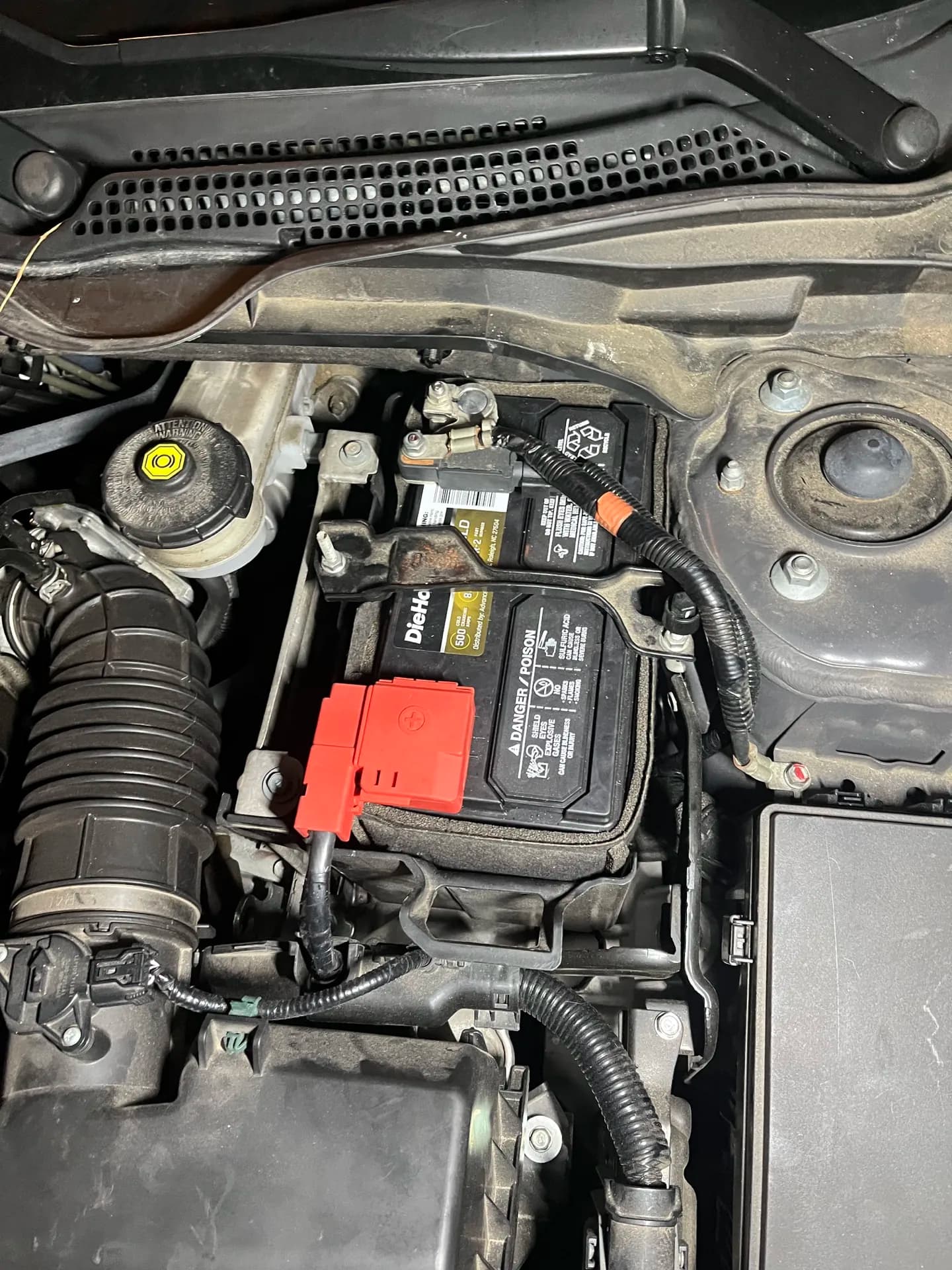
Straightforward guidance, not a remote diagnosis. Vehicle symptoms can have multiple causes. If driving feels unsafe, stop in a secure place and arrange hands-on help.
Your car takes longer than usual to start, the headlights look dim, or you hear clicking when you turn the key. These can be signs of a bad car battery, but they can also point to an electrical connection, starter, or charging system problem.
The important difference is whether your battery is simply discharged or has deteriorated to the point that it can no longer hold a useful charge. A jump-start may help with a discharged battery, but it will not repair a battery that has failed internally.
Here are seven warning signs to watch for, how to distinguish battery trouble from other starting problems, and what to do if your battery is too weak to start your car.
Seven warning signs of a bad car battery
1. Your engine cranks slowly
One of the most recognizable signs of a weak battery is slow cranking. Instead of turning over at its usual speed, the engine sounds sluggish when you attempt to start it.
A battery that cannot supply enough current may be responsible. However, poor electrical connections or a failing starter can cause similar symptoms.
What to do: If slow cranking happens repeatedly, have the battery and starting system tested instead of assuming the battery needs replacing.
2. You hear clicking when you turn the key
Rapid clicking often indicates insufficient electrical power reaching the starter. A discharged battery or poor battery connection is a common possibility.
A single solid click may point toward a starter-related fault, although battery and connection problems can produce similar symptoms.
What to do: Note whether the sound is rapid clicking, one click, or complete silence. For more detail, read Car Won't Start and Just Clicks.
3. Your headlights or dashboard lights appear dim
Dim headlights, flickering dashboard lights, or electrical accessories behaving unusually can indicate low battery voltage or a poor connection.
However, lights that work normally do not prove the battery is healthy. The battery may still lack the power needed to crank the engine.
What to do: Observe whether the lights become noticeably dimmer when you attempt to start the car. A battery and electrical-system test can help establish the cause.
4. Your car needs repeated jump-starts
If your car starts after a jump but fails to start again later, the battery may no longer hold its charge.
Other possibilities include an alternator that is not charging properly or an electrical component that continues drawing power while the car is parked.
What to do: Have both the battery and charging system checked. Repeated jump-starts may temporarily restore starting ability without resolving the underlying problem.
5. Your battery is old or has visible damage
Car batteries deteriorate with age, temperature exposure, and repeated discharge. A battery that has been in service for several years deserves closer attention if starting problems develop.
Visible swelling, cracks, leakage, or unusual heat are more serious warning signs.
What to do: If the battery is swollen, leaking, cracked, or unusually hot, do not attempt a jump-start. Keep away from the battery and arrange professional assistance.
6. Electrical accessories behave inconsistently
Power windows that operate slowly, flickering lights, or other unusual electrical behavior can accompany low voltage or poor connections.
These symptoms are not exclusive to a bad battery. Alternator problems, wiring faults, and other electrical issues may cause similar behavior.
What to do: Consider the full pattern of symptoms rather than diagnosing the battery from one accessory alone.
7. Your car starts sometimes but not others
Intermittent starting problems can occur when a battery is deteriorating or a connection is unreliable. The car may start normally on one attempt and struggle on the next.
A starter motor, relay, or other part of the starting circuit can also cause intermittent symptoms.
What to do: Record when the problem occurs, whether the engine cranks slowly, and whether a jump-start changes anything. This information can help guide diagnosis.
How does a car act when the battery is going bad?
A failing battery often reveals itself through a combination of symptoms rather than one definitive warning.
| Symptom | What it may indicate |
|---|---|
| Slow engine cranking | Weak battery, poor connection, or starter problem |
| Rapid clicking | Insufficient starting current or an electrical connection problem |
| Dim lights and weak accessories | Low voltage, battery trouble, or charging-system fault |
| No dashboard lights | Deeply discharged battery, disconnected connection, or another electrical fault |
| Starts after a jump | Discharged battery or another problem that needs further testing |
| Battery repeatedly goes flat | Failing battery, charging-system issue, or parasitic electrical drain |
| Battery warning light while driving | Possible charging-system problem |
These symptoms are clues, not confirmation that the battery has failed. A battery test, connection inspection, and charging-system checks can help distinguish between possible causes.
Can a car battery be so dead it can't be jumped?
Yes. A battery can be too damaged or internally failed to recover through a jump-start. But a battery that is completely discharged is not necessarily beyond recovery.
The distinction matters because a jump-start supplies external electrical power to help crank the engine. It does not repair damaged internal battery components.
When a jump-start may work
A jump-start may work when the battery has lost its charge but can still accept and deliver the current required to start the engine.
Possible reasons for a discharged battery include:
- Headlights or interior lights left on.
- A vehicle sitting unused for an extended period.
- Repeated short trips that do not adequately replenish the charge.
- A charging-system problem that has gradually depleted the battery.
If the car starts, the battery and charging system should still be checked if the discharge was unexplained or the problem recurs.
When a jump-start may fail
A jump-start may not work if:
- The battery has an internal failure.
- The battery is physically damaged.
- The battery connections are too poor to conduct sufficient current.
- The starter or another part of the starting system is faulty.
- The vehicle has a separate electrical or mechanical problem.
A battery that has been deeply discharged may also need controlled charging and testing rather than repeated jump attempts.
Safety first: Never jump-start a battery that is swollen, cracked, leaking, unusually hot, or suspected of being frozen. Follow the vehicle manufacturer's jump-starting procedure, particularly for vehicles with sensitive electronics or hybrid systems.
If a correctly performed jump-start does not work, stop guessing and arrange diagnosis.
How long will a car run with a dead battery?
The answer depends on what you mean by a “dead battery.”
If the battery is discharged and the engine will not start, the car generally cannot run until it starts. If the engine is already running, however, the alternator normally supplies electrical power and helps recharge the battery.
If the battery has failed internally, there is no reliable universal number of minutes or hours the car will continue running. The outcome depends on the alternator's condition, the battery's failure mode, the vehicle's electrical demands, and the vehicle's design.
What happens in different situations?
- The battery is discharged, but the charging system works: The engine may continue running after a successful jump-start while the alternator supplies power. The battery may still require proper charging or replacement.
- The battery has failed internally: The car may start with external assistance, but the failed battery may cause continued electrical problems. The result depends on the nature of the failure and the vehicle.
- The alternator is not charging: The vehicle may run temporarily on the remaining electrical supply, then stall or lose electrical functions as voltage falls. The time cannot be predicted reliably.
- The car starts but fails again later: The battery, charging system, and possible electrical drains should be tested.
A jump-start does not guarantee that the battery is fully recharged. A deeply discharged or deteriorated battery may need a proper charger or replacement, and a recurring discharge calls for further investigation.
Practical advice: Do not rely on an estimated running time to decide how far you can drive. If the battery or charging system is faulty, seek assistance rather than risking a breakdown.
How to tell whether the problem is the battery or alternator
The battery and alternator work together, but they perform different jobs.
The battery supplies the power needed to start the engine. Once the engine is running, the alternator supplies electrical power and replenishes the battery's charge.
| Observation | Possible explanation |
|---|---|
| Slow cranking after the car has been parked | Discharged or deteriorated battery, connection problem, or starter fault |
| Car starts with a jump but struggles again later | Battery that cannot hold charge, charging fault, or electrical drain |
| Battery warning light appears while driving | Possible charging-system fault |
| New battery repeatedly becomes discharged | Alternator issue, electrical drain, or another charging problem |
| Battery tests healthy but engine will not crank | Starter circuit or another starting-system fault |
These patterns help guide testing, but they do not establish a diagnosis by themselves.
For a more detailed comparison, read Battery or Alternator? How to Tell.
What should you do if you suspect a bad car battery?
Follow a simple, safety-first process.
- Observe the symptoms. Note whether the engine cranks slowly, clicks, or does nothing.
- Check for visible damage. Do not touch or jump-start a swollen, leaking, cracked, or unusually hot battery.
- Avoid repeated starting attempts. These can further discharge a weak battery.
- Arrange battery testing. A suitable battery test can assess its condition and starting capability.
- Check the charging system if necessary. If the battery repeatedly discharges, replacing it without investigating the cause may not solve the problem.
- Confirm the fault before replacing parts. A starter, alternator, or wiring issue may produce symptoms that resemble a bad battery.
Cold weather can make a weak battery's starting problems more noticeable. If the issue occurs primarily in low temperatures, see Car Won't Start in Cold Weather.
If the battery tests healthy but the car still refuses to start, Car Not Starting but Battery Is Fine covers other possible causes.
For the wider troubleshooting process, visit Car Won't Start? 7 Critical Checks.
When should you call a mobile mechanic?
Consider professional assistance if your car repeatedly needs a jump-start, the battery fails testing, the battery warning light stays on while driving, or the vehicle will not start despite a battery that appears healthy.
Wayne's Mobile Mechanic serves Westerville and Greater Columbus, offering mobile automotive diagnostics and repairs. Depending on the vehicle and symptoms, an on-site visit may help investigate battery, starter, alternator, and other electrical or starting-system problems.
The benefit of diagnosis is that you can determine whether the battery needs charging, replacement, or further investigation into another system before spending money on parts.
Don't tow it. Don't wait. Call Wayne, and the garage comes to you.
Visit Wayne's Mobile Mechanic Services to discuss your starting problem and whether mobile service is appropriate.
Frequently asked questions
How can I tell if my car battery is bad or just dead?+
A discharged battery may recover after appropriate charging, while a deteriorated battery may fail a battery test or struggle to hold a charge. Testing is the most reliable way to distinguish the two.
Can a completely dead car battery be recharged?+
Sometimes. A deeply discharged battery may recover with an appropriate charger, but an internally damaged battery may need replacement. The condition of the battery determines the outcome.
Will a car run with a bad battery once it has started?+
It may, depending on the type of battery failure and whether the alternator and electrical system are functioning correctly. However, continued operation cannot be guaranteed, and electrical problems may develop.
Does a jump-start mean I need a new battery?+
No. A jump-start may simply indicate that the battery was discharged. If the battery repeatedly loses charge, have the battery, charging system, and possible electrical drains checked before deciding what to replace.
Can a bad alternator make a good battery go dead?+
Yes. If the alternator fails to replenish the battery's charge adequately, a healthy battery can gradually become discharged. Repeatedly charging or replacing the battery without addressing the charging problem may not solve the issue.
Should I drive after jump-starting my car?+
Only if the vehicle is operating safely and the manufacturer's instructions and circumstances permit it. A jump-start does not confirm that the battery or charging system is healthy. If a charging warning remains on or the vehicle behaves abnormally, seek assistance instead of relying on continued driving.