
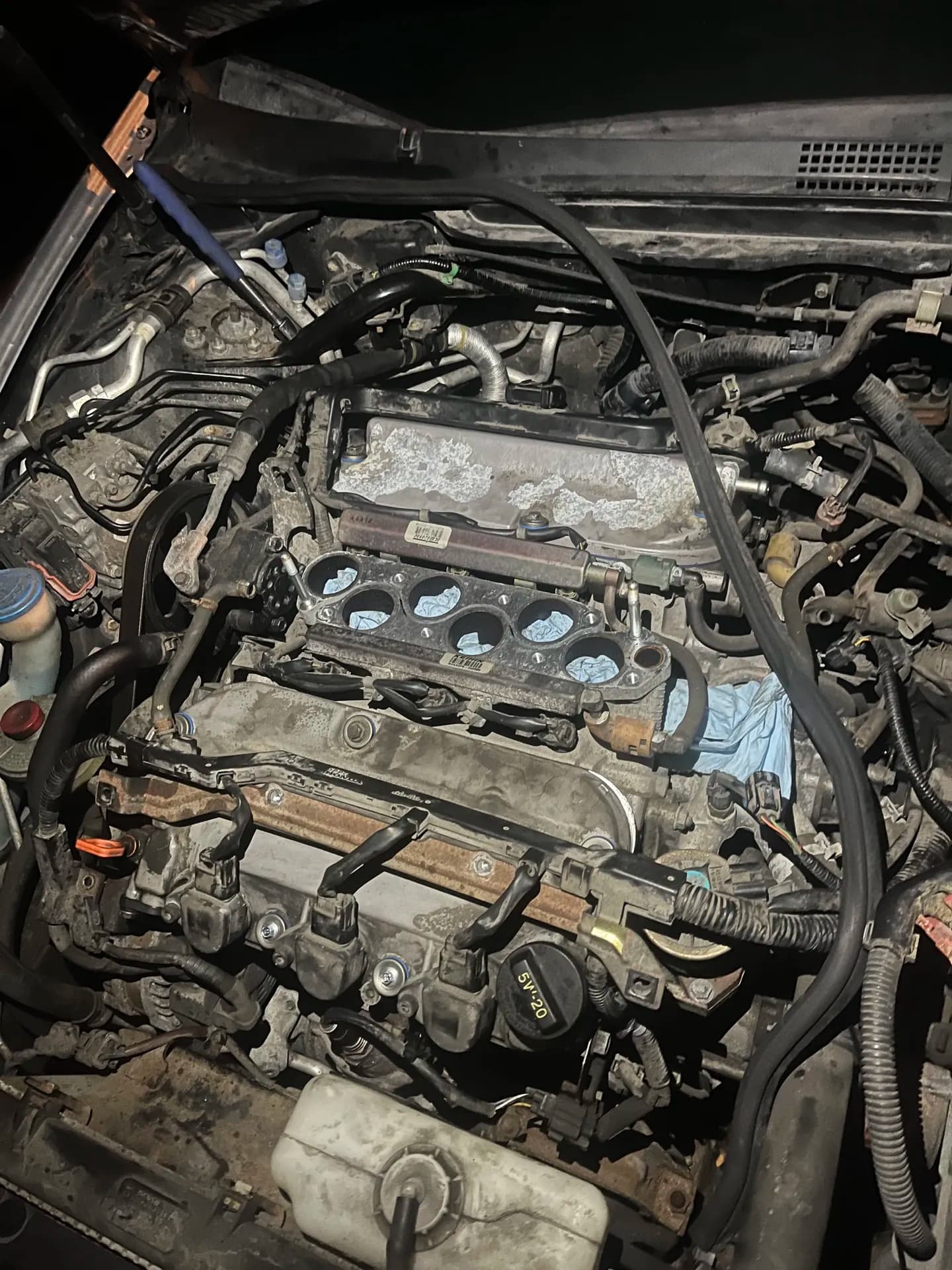
Straightforward guidance, not a remote diagnosis. Vehicle symptoms can have multiple causes. If driving feels unsafe, stop in a secure place and arrange hands-on help.
Your car cranks but refuses to start, loses power while accelerating, or suddenly stalls after running normally. A bad fuel pump could be responsible, but similar symptoms can come from a blown fuse, faulty relay, restricted fuel supply, or another engine problem.
The fuel pump delivers fuel from the tank to the engine at the pressure required for proper operation. When fuel delivery becomes inadequate, the engine may struggle to start, hesitate under load, or stop running altogether.
Before replacing the pump, it is important to distinguish a possible fuel-delivery problem from a starter or electrical fault. Here is what to look for, what you can safely check, and how a fuel pump can be tested without removing it from the vehicle.
Five critical warning signs of a bad fuel pump
A failing fuel pump may produce several symptoms. The pattern matters more than any single sign.
1. Your engine cranks but will not start
You turn the key or press the start button, and the engine turns over, but it never actually starts running.
A fuel pump that cannot deliver sufficient fuel pressure may cause this condition. However, ignition faults, sensor problems, immobilizer issues, and other fuel-system faults can produce similar symptoms.
What to notice: Does the engine turn over at its usual speed without starting? If so, fuel delivery is one system worth investigating, particularly if the vehicle has also been losing power or stalling.
If the engine does not turn over at all, investigate the battery, starter, and starting circuit before assuming the fuel pump is responsible.
2. The engine sputters or hesitates while driving
A weakening fuel pump may struggle to maintain adequate fuel delivery when the engine demands more fuel, such as during acceleration or uphill driving.
You might notice:
- Jerking or sputtering during acceleration.
- A hesitation when pressing the accelerator.
- A temporary loss of power at higher speeds.
- Performance that becomes inconsistent under load.
These symptoms can also result from ignition problems, restricted fuel filters, injector issues, or other engine faults.
What to do: If the vehicle repeatedly loses power, particularly in traffic, avoid continuing to drive it until the cause is assessed. Sudden loss of power can create a safety hazard.
3. The engine stalls unexpectedly
A fuel-delivery problem may cause the engine to stall when the pump cannot maintain the required pressure or flow.
The vehicle might stall during acceleration, at idle, or after running for a period of time. A pump that works intermittently can sometimes make the problem difficult to reproduce.
However, stalling can also result from charging-system faults, crankshaft-position sensor problems, ignition issues, or other failures.
What to do: If the engine stalls while driving, pull over safely if possible and arrange assistance. Do not assume that restarting the vehicle means the fault has disappeared.
4. You hear an unusual whining or buzzing sound near the fuel tank
Many electric fuel pumps produce a brief, relatively quiet hum when the ignition is switched on. This sound may come from the rear of the vehicle, near the fuel tank.
A pump that develops a noticeably louder or changing whine may be struggling, although low fuel levels, restrictions, wear, and other conditions can affect pump noise. Some pumps are difficult to hear from inside the car.
What to notice: Pay attention to a new, persistent high-pitched whine or buzzing sound that seems to come from the fuel-tank area, especially if starting or driving symptoms occur at the same time.
A noisy pump is a reason to investigate, not proof that it needs replacement.
5. Starting takes longer than usual
If the engine takes several attempts to start or cranks longer than normal before running, inadequate fuel pressure may be one possible explanation.
Other causes include a weak battery, fuel-pressure loss while parked, an ignition problem, or an issue with the engine-management system.
What to do: Record whether the problem occurs after the car has been parked overnight, when the engine is warm, or under particular driving conditions. This information can help narrow down the diagnostic process.
How to tell if it's the fuel pump or starter
One of the most important distinctions is whether the engine actually cranks.
The starter motor turns the engine during a starting attempt. The fuel pump supplies fuel so the engine can run. These components perform different jobs, so their failures often produce different symptoms.
Engine cranks normally but will not start
A fuel-delivery problem is possible, particularly if there are other fuel-pump symptoms. Ignition, sensors, and other engine-management components must also be considered.
You hear clicking but the engine does not turn over
A weak battery, poor electrical connection, or starter-circuit problem is more directly relevant. A fuel pump normally does not cause the starter to stop turning the engine. For more on this symptom, read Car Won't Start and Just Clicks.
Nothing happens when you try to start the car
Check the basic starting conditions and consider the battery, starter circuit, ignition controls, and security system before focusing on fuel delivery.
A cranking engine that never starts makes fuel delivery worth checking, but it does not establish that the pump is faulty. Likewise, a clicking sound generally points toward the starting or electrical system rather than proving anything about fuel pressure.
For a broader starting-problem checklist, see Car Won't Start? 7 Critical Checks.
What does a bad fuel pump sound like when starting a car?
A common preliminary check is listening for the fuel pump's brief priming sound.
On many vehicles with electric fuel pumps, switching the ignition to the appropriate ON position may activate the pump briefly before the engine starts. You may hear a quiet hum from the rear of the vehicle.
A struggling pump may produce an unusually loud or inconsistent whine. However, the sound varies by vehicle, and some pumps are not readily audible.
What if you hear no fuel-pump sound?
Silence does not automatically mean the pump has failed. Possible explanations include:
- A blown fuel-pump fuse.
- A faulty pump relay.
- A wiring or electrical supply problem.
- A pump that is not being commanded to run at that moment.
- A pump motor that has failed.
Some vehicles operate their pumps differently, and some do not make an easily audible priming sound. The owner's manual and the vehicle's specific system design matter.
What if you can hear the pump running?
Hearing a hum does not prove that the pump produces enough fuel pressure. A pump may operate but still fail to deliver the pressure or flow required by the engine.
The next step is to check the relevant electrical circuit and fuel pressure against the manufacturer's specifications.
How to test a fuel pump if your car won't start
The right test depends on the vehicle, its fuel system, and whether the engine cranks.
Begin with simple observations, then move to more specific diagnostic tests when necessary.
Step 1: Confirm the basic symptoms
Check whether the engine cranks normally, turns slowly, clicks, or remains completely silent. Also consider:
- Whether the engine previously sputtered or lost power.
- Whether the vehicle stalled while running.
- Whether starting became progressively more difficult.
- Whether the fuel gauge indicates an empty tank.
These observations help determine whether the issue is more consistent with a starting-system fault or a possible fuel-delivery problem.
Step 2: Listen for the fuel pump's priming sound
If your vehicle's design supports an audible prime, switch the ignition to the position specified in the owner's manual without cranking the engine. Listen for a brief hum from the fuel-tank area.
- A brief hum: The pump may be operating, but this does not confirm adequate fuel pressure.
- No audible hum: The pump, fuse, relay, wiring, control system, or normal operating strategy may explain the silence.
Do not repeatedly cycle the ignition or conclude that the pump is faulty based on sound alone.
Step 3: Have the fuel-pump fuse and relay checked
A pump cannot operate properly if its electrical supply is interrupted.
The relevant fuse, relay, wiring, connectors, and control signals may need inspection. Fuse and relay locations differ between vehicles, so use the owner's manual or vehicle-specific service information.
Never replace a fuse with a higher-rated one or bypass a circuit protection device. If a fuse blows repeatedly, the underlying electrical fault needs to be identified.
Step 4: Measure fuel pressure against the manufacturer's specification
A fuel-pressure test helps establish whether the system delivers the pressure required by the engine.
The test method depends on the vehicle. Some systems have a dedicated pressure-test port, while others require different diagnostic equipment or scan-tool data.
A low reading does not automatically prove that the pump itself has failed. Restricted filters or lines, faulty regulators, electrical supply problems, and other components may also affect fuel pressure.
A technician will compare the results with the specification for the particular make, model, year, and engine.
Safety note: Fuel systems may contain highly flammable fuel under pressure. Do not loosen fuel lines or open a pressurized fuel system to test it without the correct equipment, procedures, and training. Professional testing is the safer choice if you are unfamiliar with fuel-system work.
How to test a fuel pump without removing it
In many vehicles, the fuel pump can be evaluated while it remains installed in the fuel tank. Removing the pump is not usually the first step in diagnosing a suspected failure.
The main goal is to determine whether the pump receives the correct electrical supply and delivers adequate fuel pressure.
Fuel-pressure testing
A suitable pressure gauge can measure fuel pressure at an approved test point where the vehicle provides one. Other vehicles require a manufacturer-specific procedure or scan-tool data.
The result is compared with the manufacturer's pressure specification. If pressure is low, further testing is needed to determine whether the pump, its electrical supply, a restriction, or another component is responsible.
Electrical testing
A technician may check the pump's power supply, ground connection, wiring, and control circuit.
Depending on the system, voltage-drop testing or other electrical measurements may help identify resistance, damaged wiring, or an interrupted power supply.
A pump that receives the correct electrical supply but does not operate may have failed. A pump that operates but produces inadequate pressure may also be defective, but other fuel-system faults must be ruled out.
Diagnostic scan-tool checks
Some vehicles provide fuel-pressure information or relevant fault codes through a diagnostic scan tool.
These readings can help direct the investigation, but not every vehicle reports fuel-pump operation or pressure in the same way. A code or scan-tool reading is a diagnostic clue rather than automatic proof that the pump needs replacing.
These approaches can help assess a fuel pump without removing it. The appropriate method depends on the vehicle's design and available test points.
Common mistakes when diagnosing a bad fuel pump
Fuel-pump replacement can be an expensive repair, so it is worth ruling out other causes before committing to it.
| Common mistake | Better approach |
|---|---|
| Assuming no humming sound means the pump is dead | Check whether the vehicle should prime audibly, then investigate the circuit and pressure. |
| Replacing the pump because the engine will not start | Determine whether the engine cranks and test the relevant systems. |
| Assuming a running pump is a healthy pump | Verify pressure and, where needed, fuel delivery under the appropriate conditions. |
| Replacing a fuse without investigating repeated failures | Find the underlying electrical fault if the fuse blows again. |
| Treating a diagnostic code as proof of pump failure | Confirm the suspected fault with appropriate testing. |
| Assuming low fuel pressure always means a bad pump | Investigate restrictions, electrical supply, regulators, and other relevant components. |
Fuel filters, wiring, relays, fuel-pressure regulators, and other components can mimic a fuel-pump failure. Proper diagnosis helps avoid replacing a working part without addressing the real problem.
When should you call a professional mechanic?
Professional diagnosis is appropriate if your car cranks but will not start, repeatedly stalls, loses power during acceleration, or shows persistent signs of a fuel-delivery problem.
Stop driving and arrange assistance if the engine stalls unexpectedly or the vehicle cannot operate safely.
Do not attempt to start the vehicle if you smell raw fuel or see fuel leaking. Avoid sparks and ignition sources, move away from the immediate hazard, and arrange professional assistance.
A mechanic can determine whether the problem is actually the fuel pump or another part of the fuel or electrical system. This is particularly important before replacing an in-tank pump, which may require substantial disassembly to access.
Get your car diagnosed at your location
Wayne's Mobile Mechanic serves Westerville and Greater Columbus, with mobile automotive diagnostics and repairs available seven days a week, from 6:30 AM to 9 PM.
If your vehicle has a possible fuel-delivery problem, contact Wayne to discuss the symptoms and determine whether the required diagnostic work can be performed at your location. Service suitability depends on the vehicle and the tests or repairs needed.
Don't tow it. Don't wait. Call Wayne, and the garage comes to you.
Visit Wayne's Mobile Mechanic Services to discuss your vehicle's symptoms and the next diagnostic step.
Frequently asked questions
How do you know if a fuel pump is going bad?+
Common warning signs include hard starting, engine sputtering, stalling, loss of power under load, and an unusually loud whine near the fuel tank. These symptoms can have other causes, so testing is needed to confirm a fuel-pump problem.
Can a bad fuel pump make a car crank but not start?+
Yes. If the pump cannot deliver the fuel pressure or flow required by the engine, the engine may crank without starting. Ignition, sensor, and other fuel-system faults can cause the same symptom.
How can I tell if it's the fuel pump or starter?+
If the engine cranks normally but will not run, a fuel-delivery problem is one possibility. If you hear clicking but the engine does not turn over, the battery, starter, or starting circuit is more directly relevant. Neither symptom alone confirms a failed component.
Can a fuel pump be tested without removing it?+
Yes. Depending on the vehicle, a mechanic may measure fuel pressure, test the electrical supply and ground, inspect the fuse and relay, or use scan-tool data. The appropriate tests depend on the vehicle's fuel-system design.
Does a fuel pump make a sound before starting?+
Many electric fuel pumps produce a brief hum when the ignition is switched on. However, the sound may be difficult to hear, and some vehicles operate the pump differently. Hearing the pump does not prove that it produces sufficient pressure.
Should I replace the fuel pump if the car won't start?+
Not without appropriate diagnosis. A faulty relay, blown fuse, wiring problem, restricted fuel supply, or other component can mimic pump failure. Testing helps determine whether the pump itself needs replacement.